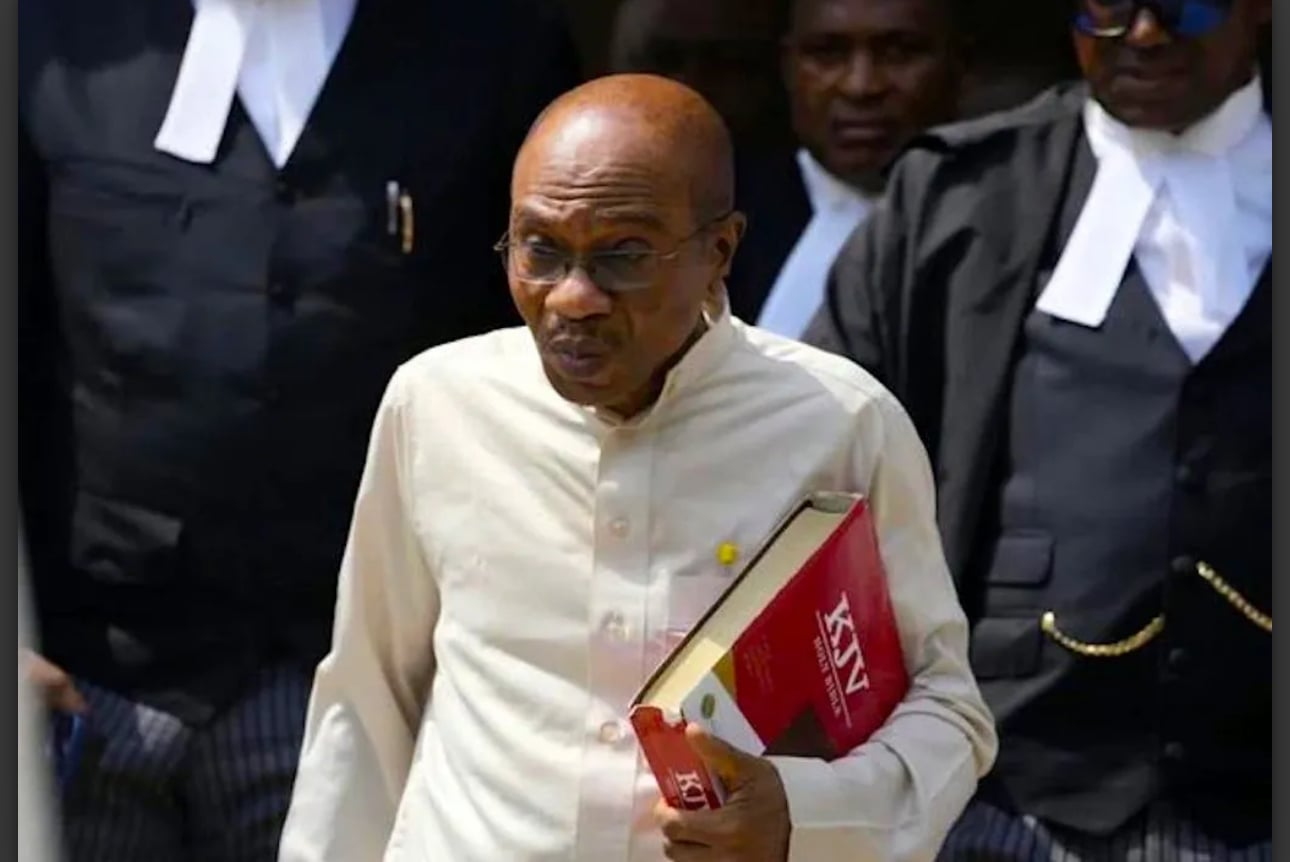

The courtroom battle in the ongoing trial of former Central Bank Governor, Godwin Emefiele, has shifted sharply to questions of due process and alleged coercion, as Lagos State Special Offences Court prepares to decide whether a key statement can stand as evidence.
Justice Rahman Oshodi fixed May 4, 2026, to rule on the admissibility of an extra-judicial statement made by co-defendant Henry Omoile, after both defence and prosecution teams locked horns over how the statement was obtained.
At the heart of the dispute is not just the content of the statement, but whether it was made freely or under questionable circumstances.
Defence lawyers argued that the integrity of the investigation process is on trial, insisting that the statement should be discarded due to alleged violations of legal safeguards.
They pointed to the absence of video recording during interrogation and claimed that Omoile may have been subjected to inducement or coercion.
Counsel to the second defendant, Adeyinka Kotoye (SAN), maintained that modern criminal justice standards require strict compliance with procedures designed to protect suspects, stressing that any doubt about voluntariness should invalidate the statement.
Supporting this position, Emefiele’s counsel, Olalekan Ojo (SAN), argued that the burden lies squarely on the prosecution to prove the statement was made willingly, adding that unresolved concerns about trauma, legal representation, and inducement weaken its credibility.
However, the prosecution pushed back, describing the defence’s claims as speculative and legally flawed.
Federal Director of Public Prosecutions, Rotimi Oyedepo (SAN), insisted the statement was properly obtained in line with the law, even without video recording.
He argued that the presence of the defendant’s lawyer and the content of the statement itself, where Omoile neither implicated Emefiele nor admitted guilt, demonstrate that it was not made under pressure.
According to the prosecution, the refusal to incriminate others and the denial of wrongdoing point to an independent and voluntary account, undermining claims of coercion.
The case has been adjourned to June 26 and June 30, 2026, for continuation of the main trial.