
The Economic and Financial Crimes Commission (EFCC) has arraigned BFI Group Corporation and six of its top officials before the Federal Capital Territory High Court, Abuja, over an alleged €100 million fraud scheme targeted at the Central Bank of Nigeria (CBN).
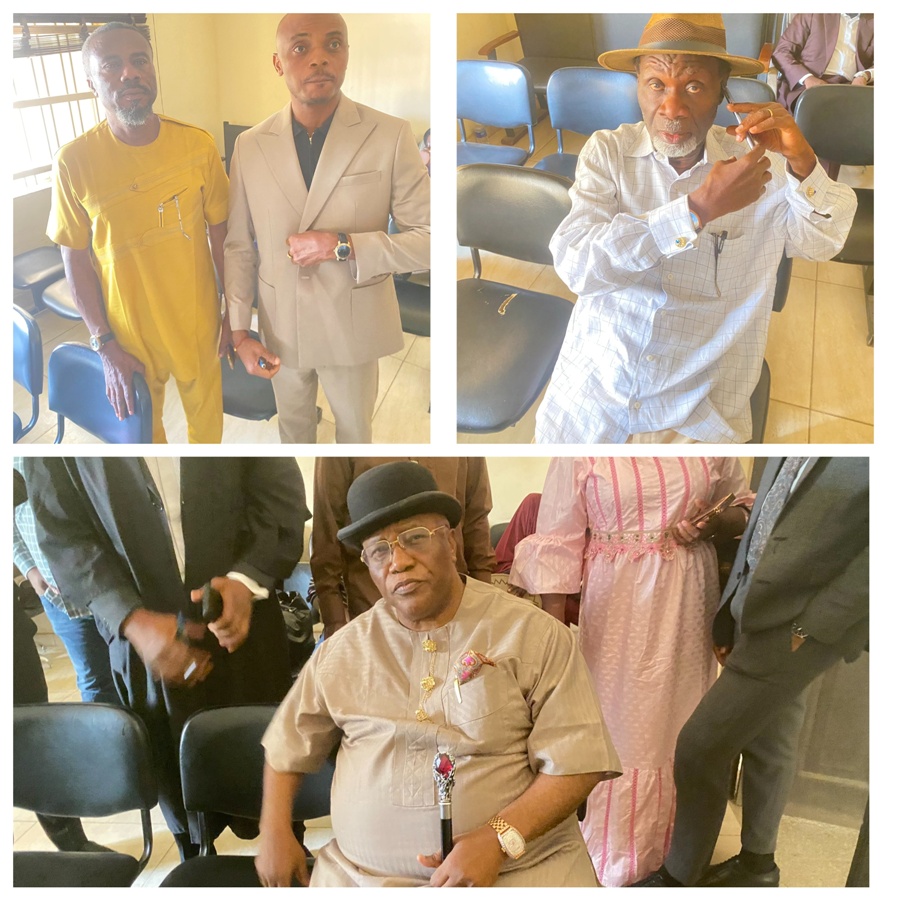
The defendants, BFI Group Corporation, Reuben M. Jaja, Uzor Chidi Jerry, David Femi James, Imeobong Jumbo Udom, Adeola Edward and Emeka Emmanuel Okorie, were arraigned before Justice M.S. Idris at the Jabi division of the court on a five-count amended charge bordering on conspiracy, false pretence and attempted financial fraud.
According to the EFCC, the alleged offences were committed between August 2020 and March 2021, when the defendants allegedly conspired to fraudulently induce the CBN to confer an unlawful benefit on BFI Group Corporation through false representations relating to foreign capital inflow.
At the proceedings, prosecution counsel Ekele Iheanacho, SAN, informed the court of an amended charge dated January 27, 2026, urging the court to have the charge read to the defendants for their plea.
One of the most damning counts accuses the defendants of attempting to fraudulently obtain a Certificate of Capital Importation (CCI) for €100 million, by falsely claiming that the funds had been lodged into a non-existent Central Bank account.
The charge specifically alleges that BFI Group Corporation and Reuben M. Jaja knowingly claimed that the €100 million was paid into account number 010147-EUR-CDACBN-52, an account the EFCC says does not exist within the CBN system, an act the prosecution insists was deliberately designed to deceive the apex bank.
All defendants pleaded “not guilty” to the charges when they were read in open court.Following the plea, the EFCC asked the court for a trial date and time to formally respond to the bail applications earlier filed by the defence.However, the bail proceedings quickly turned contentious.
Also Read: Former Afromedia Director Mohammed Gobir Jailed for Multi-Million Dollar Fraud
Counsel to the first and second defendants, Chinedu Eze, urged the court to accept an oral bail application, citing provisions of the Administration of Criminal Justice Act (ACJA) 2015 and the case of Abiola v. FRN (1995).
He further pressed the court to grant the second defendant bail on self-recognition, describing him as a “prominent king.
”The prosecution firmly objected.Iheanacho, SAN, faulted the defence’s reliance on the cited authorities, arguing that the legal provisions invoked do not apply to defendants already arraigned before a court of law.“My Lord, once a person has been charged, he ceases to be a suspect and becomes a defendant,” Iheanacho told the court.
“Section 162 of the ACJA governs bail at this stage. The authorities cited by learned counsel relate to suspects under investigation, not defendants standing trial.”
He further accused the defence of procedural inconsistency, noting that they had already filed written bail applications and served same on the prosecution.
“For them to now turn around and request oral bail is improper. In the interest of fair hearing as guaranteed under the 1999 Constitution, parties must be consistent,” Iheanacho argued.Justice Idris adjourned the matter to a later date for hearing of the bail applications and commencement of trial.
The case places BFI Group and its executives under intense legal scrutiny, as the EFCC presses forward with what it describes as a calculated attempt to exploit Nigeria’s financial system through false capital importation claims.