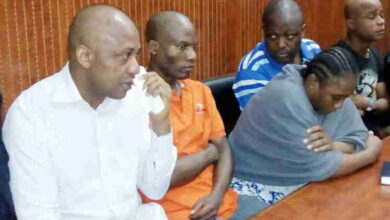


The integrity of the Economic and Financial Crimes Commission’s interrogation procedures took centre stage on Monday as the Special Offences Court in Ikeja continued a trial-within-trial in the ongoing $4.5bn fraud case involving former Central Bank of Nigeria (CBN) Governor Godwin Emefiele and his co-defendant, Henry Omoile.
Rather than the core fraud allegations, proceedings were dominated by questions over whether the EFCC followed its own rules when obtaining statements from Omoile. This test could determine the admissibility of key evidence in the high-profile prosecution.
Prosecution witness Alvan Gurumnaan, an operative of the Commission, insisted that the EFCC maintains professional standards and that Omoile’s statements were made voluntarily.
He told the court that the defendant was neither threatened nor coerced during the February 2024 interrogations.
But under cross-examination, the EFCC’s methods came under pressure when Gurumnaan conceded that, despite being part of the agency’s standard procedures, no video recording was made while Omoile was writing his statements, a gap the defence argues raises doubts about voluntariness.
You May Also Like To Read: Ajudua Drops Supreme Court Motion, Faces EFCC Investigator as $1m Fraud Trial Resumes
The defence teams, led by Senior Advocates of Nigeria Olalekan Ojo and Kotoye Adeyinka, have challenged the admissibility of four statements the prosecution seeks to tender, insisting that the absence of videographic evidence undermines the EFCC’s claims of transparency.
Still, the witness maintained that Omoile was accompanied by his lawyer, E. N. Offiong, throughout the process, even though one of the statements did not explicitly record the lawyer’s presence.
Gurumnaan said the visitors’ register confirms Offiong’s attendance and added that suspects are always cautioned before statements are taken.
The court had ordered the trial-within-trial after defence counsel objected to the tendering of Omoile’s extra-judicial statements during an earlier session in October, alleging coercion.
As the mini-trial continued, it became clear that the broader issue extends beyond Omoile’s claims, touching on how consistently Nigeria’s premier anti-graft agency adheres to its own operational standards in sensitive investigations.
Justice Oshodi adjourned the proceedings to January 15 and 16, 2026, when the EFCC is expected to continue defending the credibility of its interrogation process, a battle that could shape the trajectory of the $4.5bn fraud trial itself.