ECOWAS Court Orders Ghana to Resolve Woman’s Passport Application, Awards $15,000 for Rights Violation

ECOWAS Court Orders Ghana to Resolve Woman’s Passport Application, Awards $15,000 for Rights Violation
The Community Court of Justice of the Economic Community of West African States (ECOWAS Court) has held the Republic of Ghana liable for violating the right to freedom of movement of a Ghanaian woman after authorities failed to determine her passport renewal application despite previously recognising her as a citizen.
In a judgment delivered on June 23, 2026, the regional court ruled that Ghana’s prolonged failure to process the passport renewal application of Mrs. Mary Omerere amounted to an unjustified interference with her right to return to her country and created circumstances comparable to de facto statelessness.
The court consequently awarded Omerere $15,000 as compensation for moral damages and ordered the Ghanaian government to examine and determine her passport application within six months, with its decision to be communicated to her in writing.
The suit, marked ECW/CCJ/APP/25/25, was filed by Omerere, a Ghanaian passport holder who is married to a Nigerian and resides in the United Kingdom.
She told the court that although she had previously been recognised as a Ghanaian citizen and had been issued a valid Ghanaian passport, the Ghana High Commission in London failed to renew her passport after raising informal concerns over the authenticity of her birth certificate.
According to the applicant, after submitting her renewal application in 2021, Ghanaian officials allegedly advised her to obtain a Nigerian birth certificate or undergo DNA testing at her own expense, despite having no Nigerian nationality or birth connection beyond her marriage to a Nigerian citizen.
She argued that the unresolved passport application prevented her from travelling to Ghana to visit her grandmother during her illness and later attend her funeral after her death. She also maintained that the absence of a valid passport adversely affected her immigration status in the United Kingdom.
Read Also: ECOWAS Court Begins Implementation Drive for New Five-Year Strategic Plan
Omerere asked the court to declare that she remained a Ghanaian citizen, hold that Ghana violated her rights to freedom of movement and nationality, order the immediate issuance of a new Ghanaian passport and award her a total of $200.05 million in aggravated, general and moral damages, as well as legal costs.
Despite being duly notified of the proceedings, the Republic of Ghana neither filed a defence nor participated in the case.
In its judgment, the ECOWAS Court affirmed its jurisdiction to hear the matter under Article 9(4) of the Supplementary Act SA.1/12/25, noting that the application concerned alleged violations of fundamental human rights protected under the African Charter on Human and Peoples’ Rights and other international legal instruments.
The court also held that the application was admissible because the applicant identified herself as the victim of the alleged violations and there was no evidence that the matter was pending before another international tribunal.
On the substantive issues, the court emphasised that the right to freedom of movement encompasses not only the right to leave a country but also the right to return to one’s country of nationality.
It held that a passport is an indispensable document for exercising that right and that states have a duty to provide their nationals with the necessary means to enjoy freedom of movement.
The court observed that Omerere had previously been recognised as a Ghanaian citizen through the issuance of an official passport and had submitted several documents in support of her renewal application.
Also Read: ECOWAS Court Partners Sierra Leone Government on Legal Capacity-Building for State Attorneys
It found that Ghana failed to issue any formal decision, provide legal justification or establish a due process mechanism through which the applicant could challenge the concerns raised about her nationality.
According to the court, the indefinite failure to renew her passport prevented her from travelling to Ghana, maintaining family ties and regularising her immigration status abroad.
The court concluded that Ghana’s conduct constituted an unjustified interference with her right to freedom of movement and her right to return to her country.
Although the court held that the evidence did not establish a formal deprivation of nationality, it ruled that the circumstances created by Ghana produced effects comparable to de facto statelessness by denying the applicant the practical means of enjoying the rights associated with her recognised nationality.
Besides awarding $15,000 in moral damages, the court ordered Ghana to refrain from adopting measures that unjustifiably restrict Omerere’s freedom of movement.
However, it declined her request for a declaration affirming her Ghanaian citizenship, without prejudice to her right to pursue available administrative or judicial remedies.
The court also dismissed all other claims and ordered Ghana to bear the costs of the proceedings.
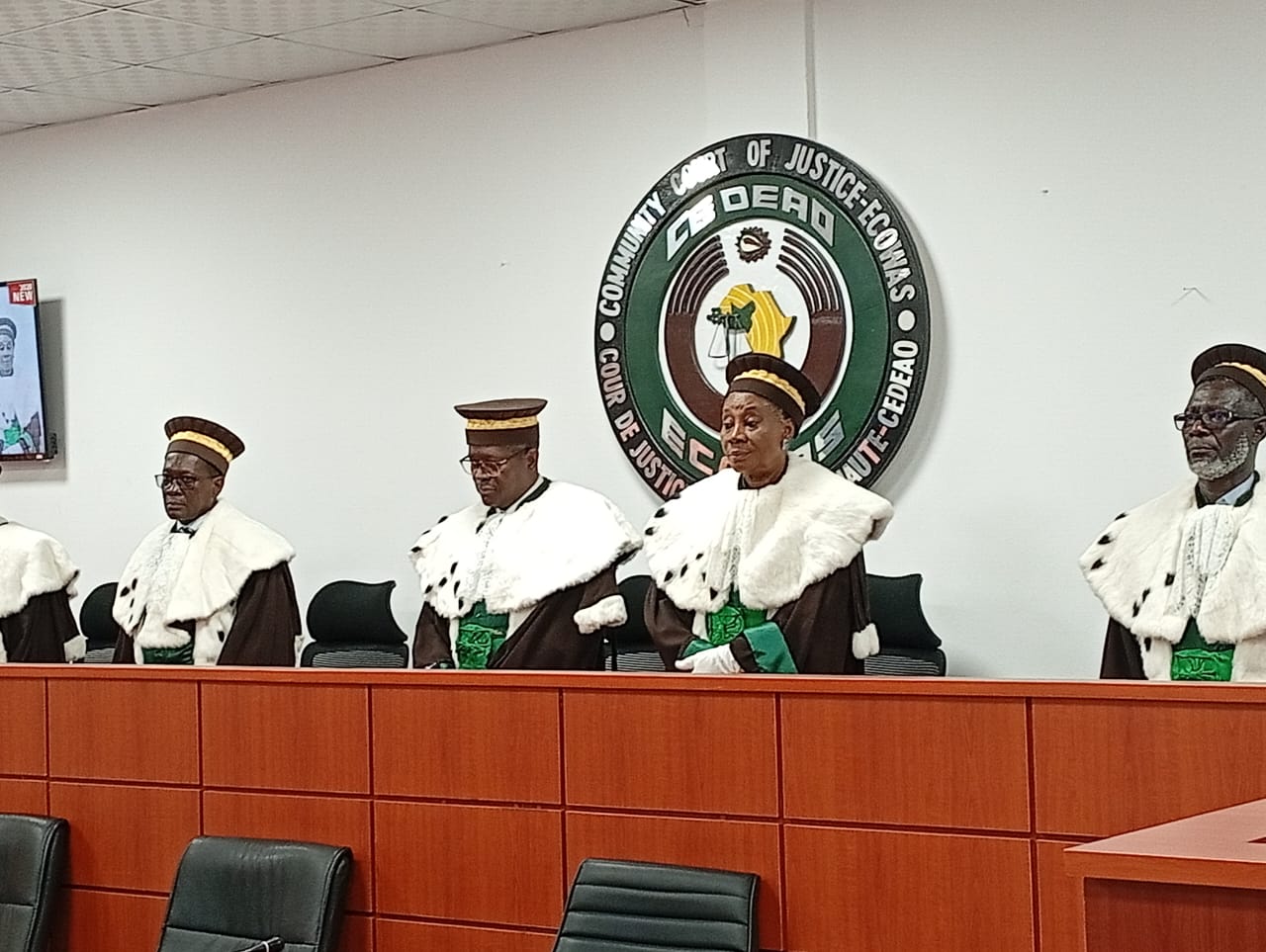
The three-member judicial panel that delivered the judgment was led by Justice Ricardo Cláudio Monteiro Gonçalves as Presiding Judge and Judge Rapporteur, with Justices Sengu Mohamed Koroma and Dupe Atoki serving as members.