
LAGOS — Five Nigerians extradited from South Africa to the United States over alleged wire fraud and money laundering offences could face a combined maximum of up to 100 years in prison if convicted on the conspiracy charges filed against them.
The United States Department of Justice said the defendants were extradited to the US on September 11, 2026, after their arrest in Cape Town, South Africa, in 2021 at the request of American authorities.
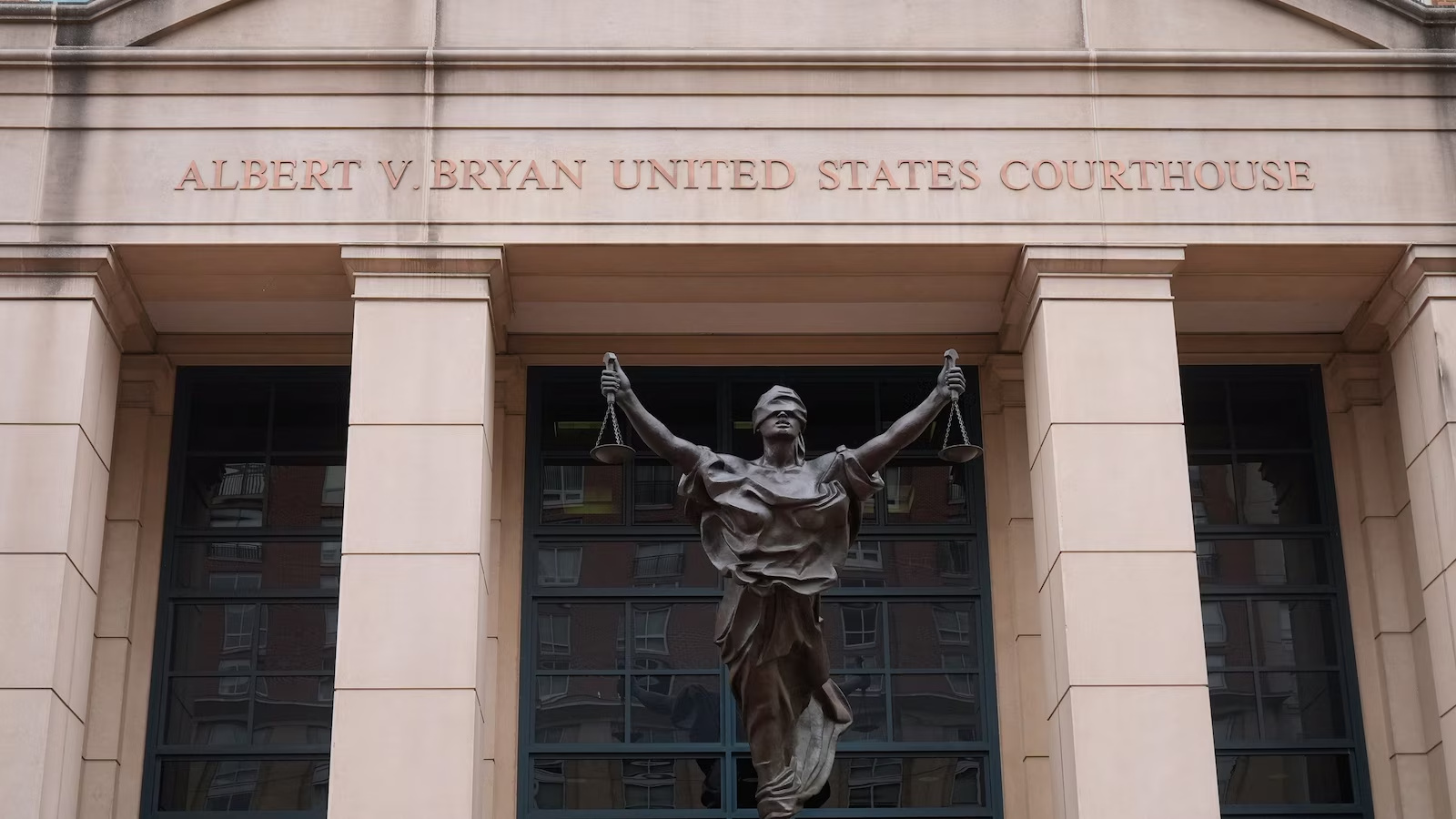
They were scheduled to appear before US District Judge Michael Shipp at the federal court in Trenton, New Jersey.
The defendants were identified as Perry Osagiede, 57; Franklyn Edosa Osagiede, 42; Osariemen Eric Clement, 40; Collins Owhofasa Otughwor, 42; and Musa Mudashiru, 38.
According to US Attorney Robert Frazer, the defendants were charged in a superseding indictment with conspiracy to commit wire fraud and conspiracy to commit money laundering over alleged activities between 2011 and 2021.
Perry Osagiede, Franklyn Osagiede and Clement also face individual wire fraud charges, while Perry Osagiede, Franklyn Osagiede and Otughwor were additionally charged with aggravated identity theft.
Frazer alleged that the five men were leaders of the Black Axe organisation and operated within its Cape Town Zone in South Africa.
He alleged that the group engaged in internet fraud schemes, including romance scams and advance-fee fraud, targeting victims in the United States.
According to the US Attorney, the defendants allegedly used social media, online dating platforms and Voice over Internet Protocol telephone numbers to identify and communicate with victims while operating under aliases.
Read Also: Judge Warns UBA, Others Against Further Delays in N4.29bn Fraud Case, Fixes June 16 for Arraignment
Victims were allegedly deceived into believing they were involved in romantic relationships with the suspects before being persuaded to send money and other valuables overseas, including to South Africa.
Frazer further alleged that some victims were threatened with the release of sensitive photographs when they hesitated to send money.
He also alleged that the conspirators used US-based bank accounts belonging to victims and other individuals to transfer proceeds to South Africa.
The US Attorney said the defendants allegedly laundered proceeds from business email compromise schemes, romance scams and advance-fee fraud through aliases and business entities designed to conceal the source of the funds.
Under US law, the wire fraud conspiracy and individual wire fraud charges each carry a maximum sentence of 20 years in prison and a fine of up to $250,000.
The money laundering conspiracy charge also carries a maximum sentence of 20 years, with a fine of up to $500,000 or twice the value of the property involved, whichever is greater.
The aggravated identity theft charge carries a mandatory two-year prison term to be served consecutively to any other sentence imposed.
The Department of Justice, however, stressed that the charges remain allegations and that the defendants are presumed innocent until proven guilty in accordance with the law.
“The charges and allegations contained in the superseding indictment are merely accusations, and the defendants are presumed innocent unless and until proven guilty,” Frazer said.