
For many Nigerians hoping that technology will finally deliver credible elections, senior lawyer Yemi Omodele has a sobering message: technology alone cannot fix the country’s electoral challenges without accountability from those in power.
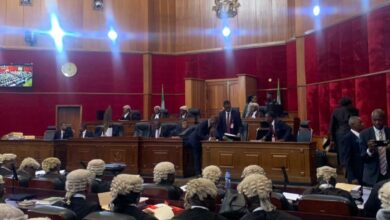
Omodele gave this warning while speaking at the official opening of his new law chambers in Ikeja, where he reflected on Nigeria’s democratic journey and the limits of relying solely on digital tools to guarantee credible elections.
According to him, innovations such as electronic transmission of results have helped improve the electoral process, but they cannot replace the need for integrity among political actors and institutions responsible for conducting elections, including the Independent National Electoral Commission.
“Technological solutions alone cannot guarantee free and fair elections without accountability from political actors and the institutions responsible for managing the electoral process,” he said.
Omodele explained that while technology can reduce human interference, it is still vulnerable to manipulation if those operating the systems lack transparency and responsibility.
For elections to truly reflect the will of the people, he noted, political leaders, electoral officials and stakeholders must commit to respecting democratic rules.
“Technology has its benefits, but there is no system anywhere in the world that cannot be compromised. That is why safeguards must always be put in place,” he added.
The legal practitioner also highlighted the critical role of the judiciary in resolving election disputes, stressing that courts decide election petitions strictly on the evidence presented before them.
Read Also: Palace Politics: Olorogun Ide Accused of Manipulating Eletu-Odibo Chieftaincy Selection
According to him, candidates and political parties challenging election outcomes must provide verifiable proof rather than rely on allegations.
“If a person alleges electoral malpractice, the burden is on that person to prove it before the court,” he said.
Beyond electoral reforms, Omodele weighed in on the ongoing national conversation about the creation of state police. He noted that Nigeria’s constitution currently centralises policing, meaning that any move to establish state police would require constitutional amendments.
He pointed out that although state police do not officially exist, several states have already created local security outfits to support federal security agencies, an indication of the limitations of a fully centralised policing system in a large and complex country like Nigeria.
However, he warned that state police could be abused for political purposes if strict legal safeguards are not established.
“There must be clear regulations to prevent state police from being used to harass political opponents or influence electoral outcomes,” he said.
Omodele also raised concerns about the huge financial demands of running state police, explaining that recruiting between 10,000 and 20,000 officers would require billions of naira annually for salaries, equipment and logistics, an expense some states may struggle to sustain.
Assessing the current administration, he described it as “a trying government,” acknowledging that while no government can satisfy everyone, efforts are being made to address the country’s challenges.