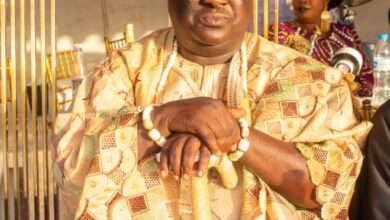

For High Chief Ambrose Albert Owuru, the courtroom had become the final battleground in a political struggle he said cost him his place in Nigeria’s history.
But on May 15, 2026, the Community Court of Justice, ECOWAS brought the long-running dispute to an end, dismissing his suit against Nigeria and ruling that he failed to prove that his fundamental rights were violated during litigation arising from the 2023 presidential election.
Owuru, who leads the Hope Democratic Party, had approached the regional court claiming he was unlawfully denied victory in the 2023 presidential election and shut out of justice by Nigeria’s judicial system.
In the suit marked ECW/CCJ/APP/21/25, the politician argued that despite filing proceedings before Nigeria’s Supreme Court to challenge the election outcome, his appeal and application for summary judgment were allegedly ignored and later dismissed without a fair hearing.
He told the court that even after he petitioned judicial authorities, leading to the reconstitution of the panel handling the matter, the new panel also failed to address the core issues he raised.
According to him, the development denied him justice and violated his rights to fair hearing and participation in governance as guaranteed under Articles 7 and 13 of the African Charter on Human and Peoples’ Rights.
Nigeria, however, rejected the allegations and maintained that Owuru neither won the election nor suffered any denial of justice.
Read Also: Supreme Court Upholds Tinubu’s Presidency, Slams Owuru with N5 Million Fine
The Federal Government argued that the proceedings before the Supreme Court followed due process and insisted that the applicant voluntarily withdrew his appeal after being given the opportunity to pursue it.
Delivering judgment, the ECOWAS Court held that while it had jurisdiction to hear complaints relating to alleged human rights violations, the applicant failed to present credible and sufficient evidence to support his claims.
The court noted that after Owuru’s complaints, a fresh judicial panel was constituted and proceedings were rescheduled, giving him another opportunity to pursue his case.
On his claim that he was denied the right to participate in governance, the court stressed that it does not determine electoral winners but only examines human rights violations connected to electoral processes.
The judges held that Owuru failed to provide verifiable evidence showing that he won the presidential election or that he was unlawfully excluded from governance.
Consequently, the court dismissed all reliefs sought by the applicant, including his request for interim measures, and ordered each party to bear its own costs.
The judgment was delivered by a three-member panel led by Hon. Justice Ricardo Cláudio Monteiro Gonçalves, alongside Hon. Justice Sengu Mohamed Koroma and Hon. Justice Edward Amoako Asante.