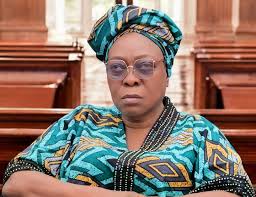

The trial of Titilayo Funmilayo Eboh over an alleged ₦247.5 million fraud suffered a setback on Friday after her absence from court sparked queries from Justice Ramon Oshodi of the Lagos Special Offences Court sitting in Ikeja.
Eboh is standing trial alongside Uchenna Ejindu and Salami Eneojo Stephen on amended charges filed by the Economic and Financial Crimes Commission (EFCC), bordering on conspiracy, obtaining by false pretence, money laundering and stealing.
According to the EFCC, the defendants allegedly conspired to defraud one Jude Nyemike Atoh of ₦247.5 million in July 2024 under the guise of providing the dollar equivalent of the money, a claim investigators said they knew to be false.
The anti-graft agency further alleged that the defendants handled and concealed $160,300 in cash in a bid to disguise the illegal origin of the funds.
One of the charges stated that the money was received and transferred in cash through arrangements allegedly linked to the defendants.
At Friday’s proceedings, defence counsel Mike Umonnan, who represented lead counsel Umoh Umoh, SAN, informed the court that Eboh was ill and receiving treatment in a hospital.
He said the information was relayed to him after the lead counsel allegedly received a call from the correctional centre on Thursday night.
Read Also: $6.23m CBN Fraud Trial: Police Witness Tells Court Suspects Confessed in Godwin Emefiele trial
Umonnan, however, admitted he could not disclose the name of the hospital where the defendant was being treated.
The prosecution team, led by T.J. Banjo, opposed the request for adjournment, noting that two prosecution witnesses had travelled from Abuja and Benin for the hearing.
The prosecution also faulted the defence for failing to present any medical report or official documentation confirming Eboh’s hospitalisation.
“We need to know the hospital so we can verify the claim. There is nothing before the court to support it,” the prosecution argued.
Delivering a brief ruling, Justice Oshodi described the explanation surrounding the defendant’s absence as unsatisfactory and stressed that the Nigerian Correctional Service had a duty to produce inmates in court.
The judge subsequently ordered the correctional authorities to ensure Eboh’s appearance at the next hearing or provide concrete reasons for her absence.
He also directed the superintendent of the correctional facility to comply fully with the court’s order.