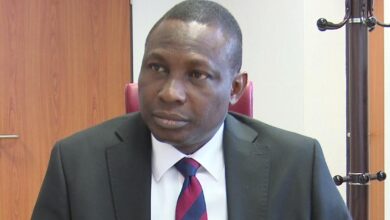

For nearly a decade, Ibrahim Usman existed in a legal limbo few citizens imagine possible in a constitutional democracy.
He was neither convicted nor freed. He simply remained behind bars forgotten by the system that arrested him, failed to prosecute him diligently, and repeatedly ignored court orders demanding his appearance.
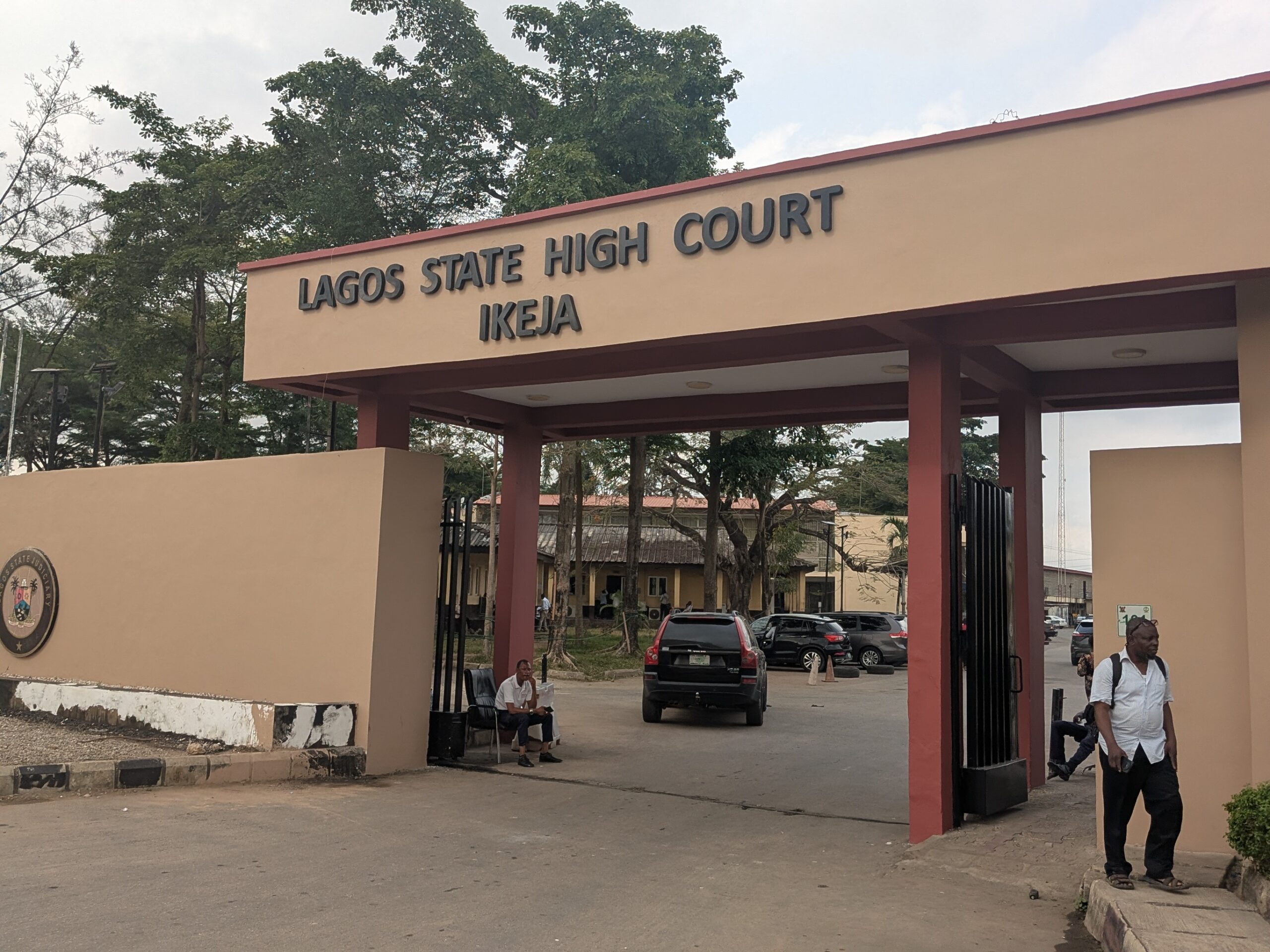
On Tuesday, a Lagos State High Court sitting in Ikeja finally brought his ordeal to an end.
Justice Rahman Oshodi discharged and acquitted Usman after ruling that the prosecution failed completely to establish the offence of defilement against him.
But beyond the acquittal, the judgment exposed disturbing cracks within Nigeria’s criminal justice administration, a system where poor coordination, institutional negligence and bureaucratic failure can keep an accused person in detention for years without trial.
The ruling has now reignited questions about unlawful detention, prison accountability and the effectiveness of justice reforms introduced to prevent exactly such occurrences.
Usman’s ordeal began on June 14, 2016, when he was arrested over allegations of unlawful sexual intercourse with a 13-year-old girl in Ipaja, Lagos.
Ordinarily, the constitutional expectation is that an accused person should either be charged within a reasonable time or released. Instead, prosecutors waited until March 2017 before filing charges.
Even after the matter reached court, the case barely moved.
According to the judgment, the Maximum-Security Custodial Centre in Kirikiri repeatedly failed to produce Usman before the court despite several production warrants issued by successive judges.
From October 2017 to February 2020, the defendant was not brought before the court. The absence became so persistent that Justice Sibily Nwaka, now a Justice of the Court of Appeal, eventually struck out the case for want of diligent prosecution.
Yet Usman remained in custody.
Perhaps the most alarming revelation from the proceedings was that prosecutors themselves reportedly lost track of the defendant’s whereabouts. While the case had effectively disappeared from the judicial radar, the accused man continued to languish in prison detained at taxpayers’ expense without active prosecution or judicial oversight.
It was not until years later, through the Lagos Criminal Information System (LCIS), that authorities rediscovered that Usman was still incarcerated.
When the case resumed, the prosecution’s case quickly collapsed under scrutiny.
Only one witness testified, Dr. Alagbe Oyedeji, a medical doctor attached to the Mirabel Centre. His role was limited to interpreting a medical report prepared by another doctor who neither appeared in court nor tendered the report as evidence.
Under cross-examination, the doctor admitted he never personally examined the alleged survivor.
The court found the evidence fundamentally defective.
There was no medical report before the court. The alleged survivor did not testify. Other material witnesses were absent. Prosecutors also failed to establish the age of the complainant, a critical ingredient in a defilement charge or provide evidence directly linking Usman to the alleged offence.
Justice Oshodi concluded that the prosecution’s evidence was “manifestly insufficient” and incapable of sustaining the charge.
In criminal law, the burden of proof rests entirely on the prosecution, and guilt must be established beyond reasonable doubt. The court held that threshold was never remotely met.
Usman’s decision not to call witnesses in his defence, the judge ruled, was justified because the prosecution failed to establish even a prima facie case requiring an answer.
Institutional Failure on Trial
Although Usman stood in the dock, the judgment effectively placed Nigeria’s criminal justice institutions on trial.
Justice Oshodi’s remarks were unusually blunt.
He condemned the custodial authorities for repeatedly disobeying production warrants issued by the High Court, describing the conduct as a “grave institutional concern.”
“A production warrant issued by a High Court is a lawful command,” the judge held, stressing that prison authorities cannot selectively obey judicial orders.
The court also criticised prosecutors for failing to monitor the status and whereabouts of defendants under their watch.
Perhaps most troubling was the finding that Usman remained in detention even after his case had been struck out in 2020.
That discovery, the court noted, only became possible because the Lagos Criminal Information System eventually detected his continued incarceration.
Justice Oshodi observed that the LCIS and Offenders’ Biometrics System were specifically designed to prevent such situations by digitally tracking defendants through every stage of the criminal justice process.
“The fate of this defendant illustrates what happens when that system does not exist or is not used,” the judge said.
Behind the legal arguments lies the deeper human tragedy of lost time.
Ten years in custody without conviction represents more than administrative failure. It means a decade separated from society, family and economic life.
For detainees awaiting trial in Nigeria, prolonged incarceration has become an enduring reality. Many remain imprisoned longer than the maximum sentence attached to the offences for which they are accused.
Legal experts have repeatedly warned that overcrowded custodial centres are filled not only with convicted offenders but also with thousands of awaiting-trial inmates trapped by slow investigations, missing case files, absent witnesses and poor coordination among justice agencies.
Usman’s case illustrates how easily an accused person can disappear inside the system when institutions fail to communicate effectively.
It also raises uncomfortable questions: How many more detainees remain in custody because files are missing, warrants ignored or prosecutors unaware of their status?
By acquitting Usman, the court restored his legal freedom. But the judgment’s wider significance lies in its warning to criminal justice institutions.
Justice Oshodi stressed that prosecutors must file charges promptly and maintain constant awareness of the status of defendants, while custodial authorities must continually justify the legal basis for every detention.
The ruling serves as a reminder that the power to arrest and detain citizens carries constitutional responsibilities.
Where those responsibilities are ignored, detention risks becoming punishment without trial.
For Ibrahim Usman, freedom came after ten years.
For Nigeria’s justice system, the judgment stands as a stark indictment, and perhaps a final warning that technology, reforms and laws mean little if institutions refuse to obey them.