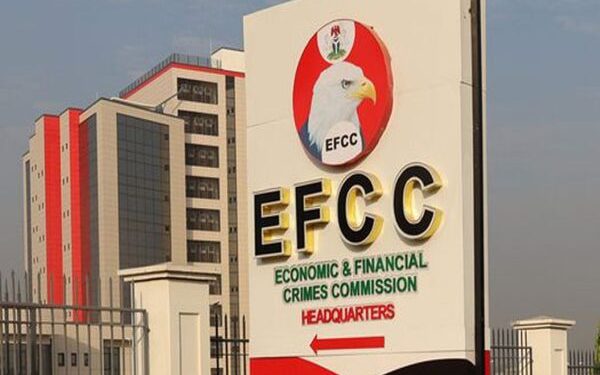

The use of plea bargain agreements by the Economic and Financial Crimes Commission (EFCC) is drawing renewed scrutiny, with court records highlighting disparities in how the mechanism is applied to high-profile suspects and low-level offenders.
A review of proceedings from the Special Offences Court in Ikeja, the Federal High Courts in Lagos and Abuja, and the FCT High Court shows that while plea bargains remain a key prosecutorial tool, outcomes often vary significantly depending on the category of defendant.
Plea bargaining, introduced under the EFCC Act, 2004 and later strengthened by the Administration of Criminal Justice Act (ACJA), 2015, allows negotiated settlements subject to judicial approval. It is widely used to secure convictions, recover assets, and reduce trial time.
However, several high-profile cases have continued to raise questions. In 2008, former Edo State Governor Lucky Igbinedion was fined N3.5 million by the Federal High Court, Enugu, after entering a plea agreement over corruption charges involving billions of naira. The sentence, which did not include a jail term, attracted widespread criticism.
Similar plea arrangements involving former Inspector-General of Police Tafa Balogun and former Bayelsa State Governor Diepreye Alamieyeseigha resulted in reduced charges and relatively short custodial sentences.
In the banking sector, former Oceanic Bank Managing Director Cecilia Ibru forfeited assets and served a six-month sentence after a negotiated plea.
Read Also: When the Prosecutor Says No: Justice on Trial in Owode Onirin
In contrast, proceedings in Lagos courts show a steady flow of convictions involving young defendants charged with internet-related offences.
Many enter plea agreements and receive prison sentences ranging from six months to two years, alongside forfeiture of assets.
Following large-scale enforcement actions, including a December 2024 operation in Victoria Island, Lagos, multiple foreign nationals were also convicted under plea agreements, fined, and later deported after serving their terms.
EFCC statistics indicate thousands of convictions in recent years, with a significant number secured through negotiated pleas.
Legal analysts say the pattern has raised concerns about proportionality, transparency, and consistency in sentencing.
Also Read: Court Gives EFCC Three Months to Conclude N1.4bn Oil Fraud Case Against Nadabo Boss
While some defend plea bargaining as an effective tool for asset recovery and case management, others argue that limited public access to the terms of agreements makes independent assessment difficult.
In court, EFCC prosecutors routinely maintain that defendants entered agreements voluntarily, fully understood the terms, and pleaded guilty without coercion.
However, broader concerns persist among observers about the opacity surrounding negotiations, particularly as most agreements are reached outside public view.
Judicial authorities have, in some cases, reviewed or adjusted plea bargain outcomes, reflecting ongoing efforts to ensure fairness within the system.
Plea bargaining remains a central component of Nigeria’s anti-corruption framework, but debate continues over how it is applied and whether it delivers equitable justice across all levels of society.